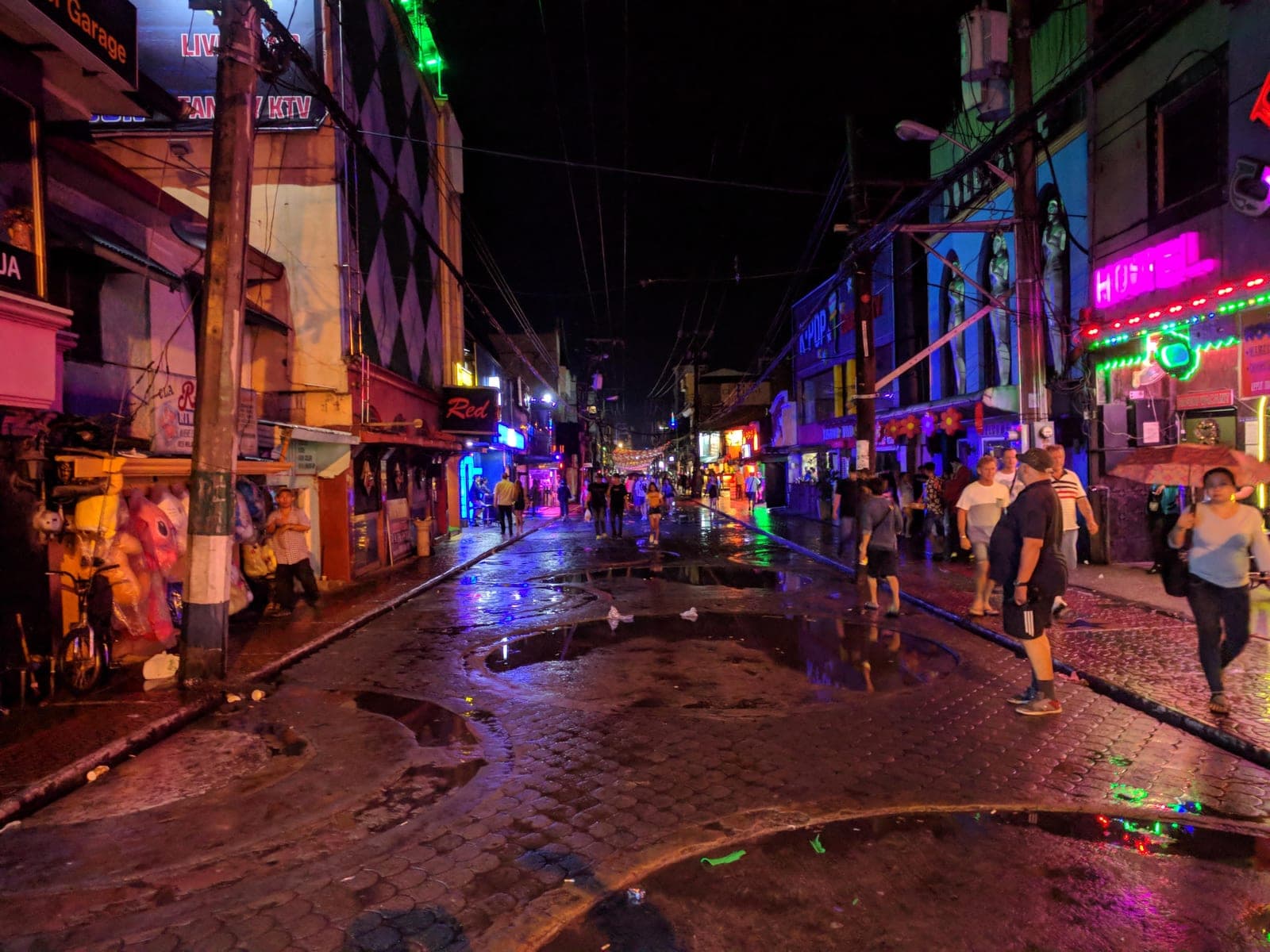


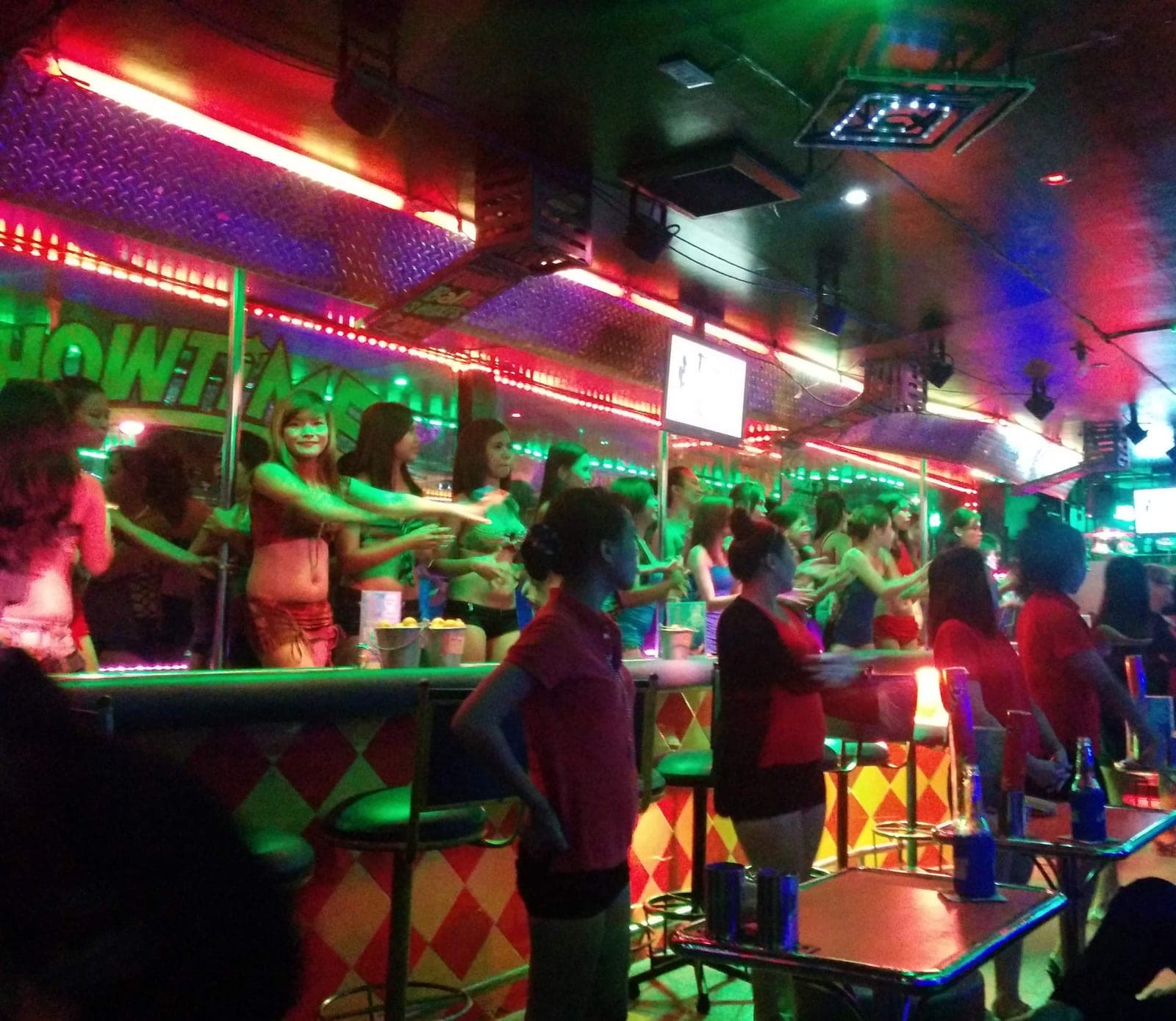
A go-go bar in Angeles City is a bar with a stage where adult women dance in rotation, and where you buy a dancer a "ladies' drink" if you'd like her to sit and talk with you — a simple system that has run more or less unchanged on Fields Avenue since the Clark Air Base days. Once you understand it, you'll never feel out of your depth in any room on the strip.
I've been drinking in these rooms since the late nineties, and the mechanics haven't really changed — only the prices and the light shows. Here's the whole thing, from the greeter at the door to the tip on the way out.
What is a go-go bar, and how is it different from a beer bar or a KTV?
There are three kinds of room you'll meet in Angeles, and it helps to know which you're standing in.
| Kind of room | What it is | Where you'll find it | Cost feel |
|---|---|---|---|
| Go-go bar | Stage, dancers on rotation, waitresses, mamasan, ladies' drinks | Walking Street, Fields Avenue, Blow Row, a few on Perimeter Road | ₱₱–₱₱₱ |
| Beer bar / bikini bar | Open-fronted or small room, girls in bikinis or uniforms, no real stage, pool table maybe | Perimeter Road, Santos Street, off-strip Fields Avenue | ₱–₱₱ |
| KTV | Private karaoke rooms, hostesses, room fee by the hour, drinks by the bottle | Friendship Highway / Korea Town, some in Balibago | ₱₱₱–₱₱₱₱ |
The go-go bar is the Angeles signature and what this guide is about. The bigger ones on Walking Street — Dollhouse, Viking Bar, Champagne Bar — are proper nightclub-scale rooms with light rigs and forty-odd girls on rotation. The smaller ones on Fields Avenue off the strip and along Perimeter Road (Don Juico Avenue) might have a dozen girls and a stage the size of a dining table. Same system, different volume.
What happens when I walk in?
You'll be met outside by greeters — "hello girls" in the local slang — whose job is to smile you through the door. Say hello back; it costs nothing. Inside, a waitress will find you a seat, usually a stool at the stage rail or a padded bench along the wall, and take your drink order. That first beer is your ticket; there's no cover charge in the go-go bars as a rule, as of August 2026.
The stage runs in shifts. A group of girls dance for a few songs, then swap with the next group, and the ones off-stage either take a break out the back or work the floor. In many rooms the girls wear a number on a badge or their bikini so you can identify them to staff without pointing.
Nobody will pounce on you. In a busy room you can drink a beer for half an hour and be left alone apart from a smile and a "you want a drink for me?" from whoever's nearest. If you're happy watching, say "maybe later" and mean it or not — nobody minds.
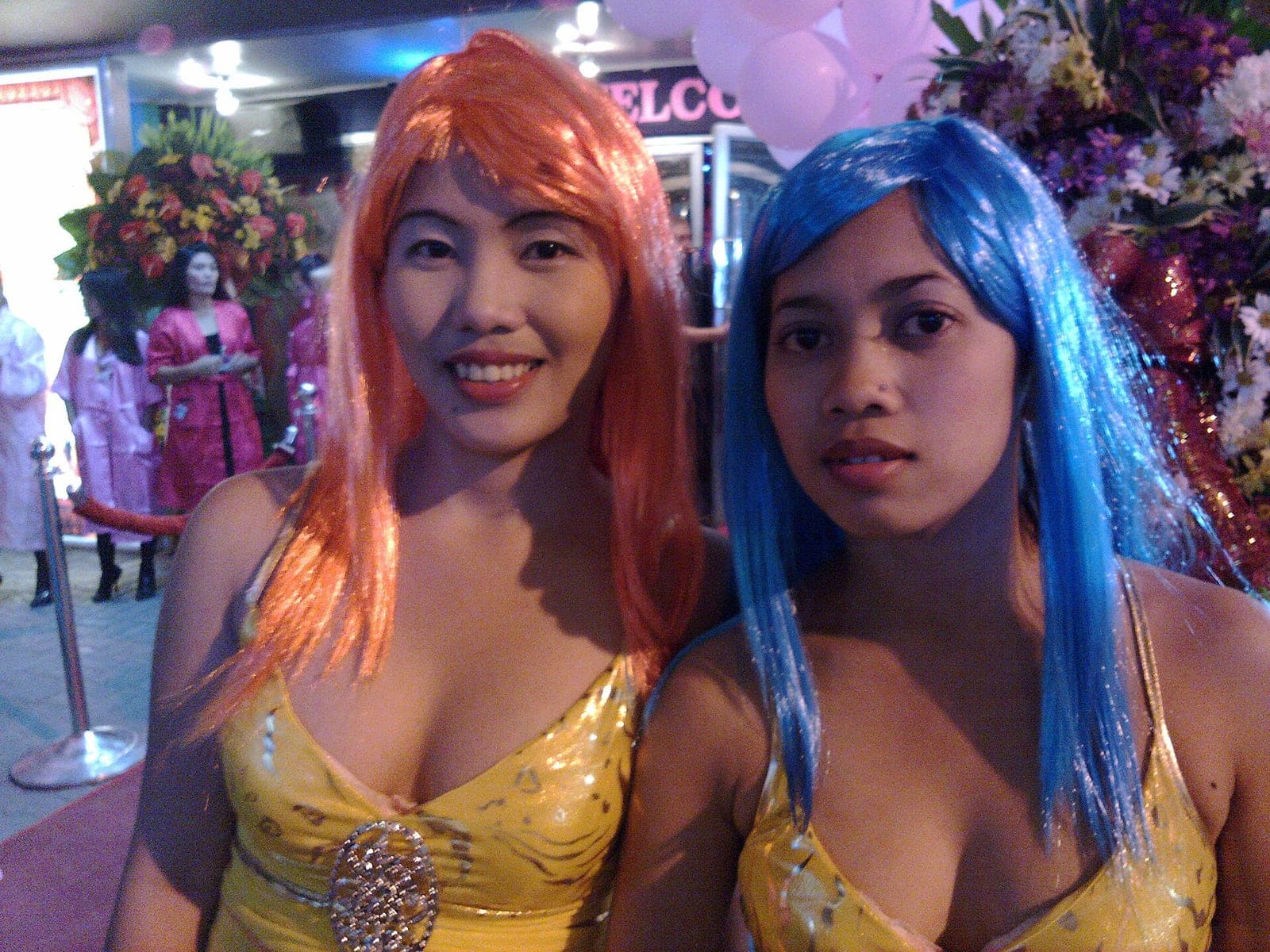
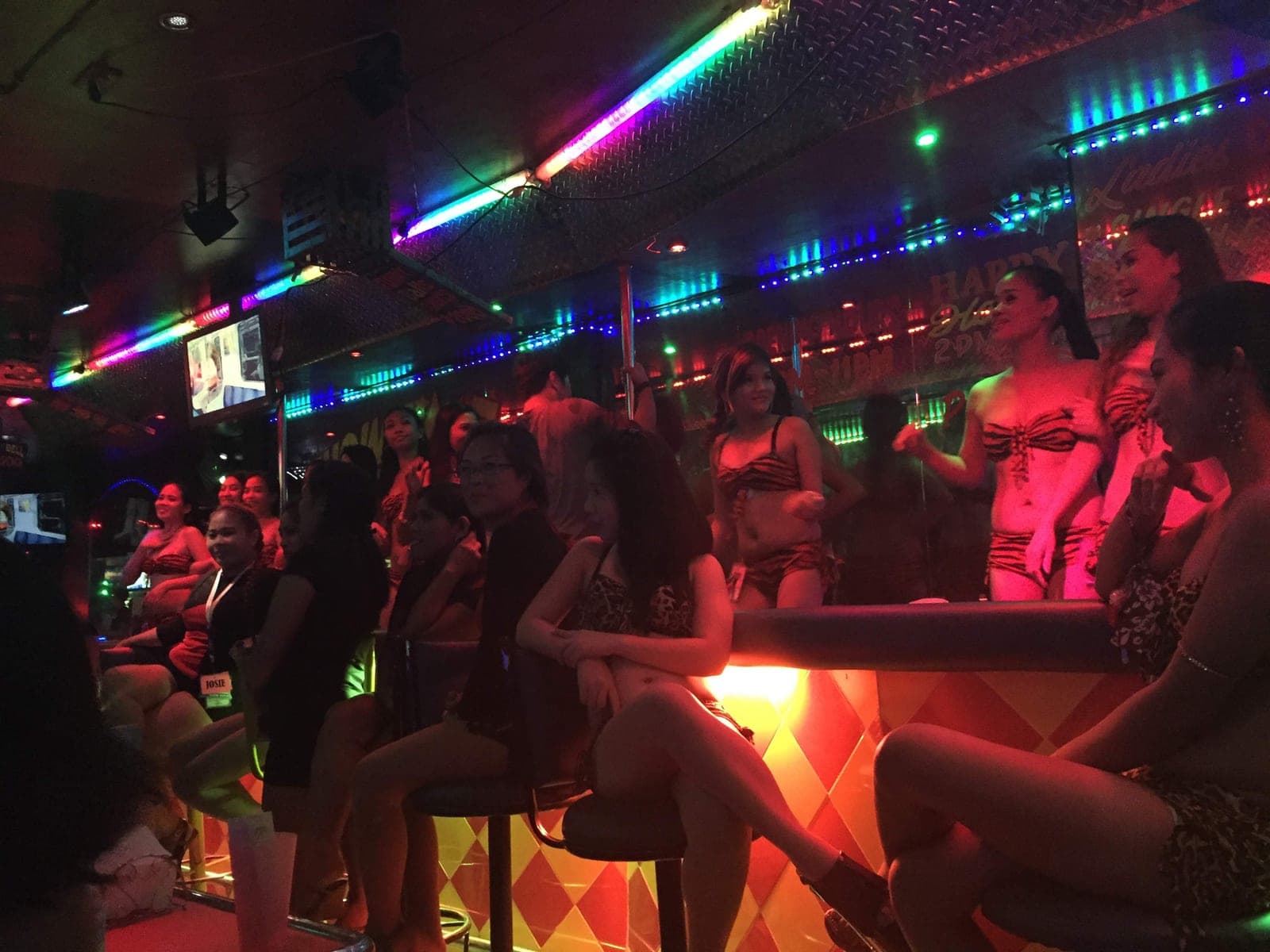
What is a ladies' drink and why does it cost more than my beer?
A ladies' drink is a drink you buy for a dancer — usually a small cocktail, juice or a "tequila" that may or may not be tequila — and it costs two to three times what your beer does. That mark-up is the point: a slice of it goes to the girl as her commission, and it's how the room pays the dancers beyond a small basic wage. Buy her a drink and she'll sit with you while she drinks it, which in practice means fifteen to twenty minutes of conversation, or as long as the drinks keep coming.
| Item | Typical price (Aug 2026) |
|---|---|
| San Mig Light, go-go bar | ₱180–250 |
| Same beer, ordinary bar | ₱120–160 |
| Ladies' drink | ₱400–600 |
| Bucket of beers (shared) | ₱550–750 |
| Cocktail for you | ₱250–400 |
| Tip to a dancer who looked after you | ₱100–200 cash |
A few things worth knowing:
- You'll be asked more than once. A girl who sits with you will ask for another drink when hers is done. "One more" or "not now, thanks" are both fine answers. She's working; you're the customer. Nobody sulks.
- You can buy drinks for the mamasan or a waitress as a thank-you. Same price, same mechanism.
- Prices should be on a menu. If you can't see one, ask the waitress the price of a ladies' drink before you order. Any decent room will tell you straight.
- Some rooms run "double" ladies' drinks at a higher price. Ask what you're being asked to buy.
Who is the mamasan and how do I deal with her?
The mamasan is the floor manager — an older woman, often an ex-dancer, who runs the girls: who's on stage, who's sitting where, who's on a break, who's had a rough night and needs leaving alone. Bigger rooms have several, plus a papasan (male manager) somewhere near the till. She is the most useful person in the building.
If you'd like to meet a particular girl, don't wave or shout a number. Catch the mamasan's eye or tell your waitress, "Could I buy number 22 a drink?" She'll bring the girl over if she's free, or tell you she isn't and suggest someone else. Take the suggestion graciously or say you'll wait — either is fine.
Be pleasant to her, learn her name if you're going to be a regular, and buy her a drink now and then. Mamasans have very long memories on both sides of the ledger. Treat her with respect and you'll get better tables, straighter answers and the quiet word when a girl is not who you think she is. Treat her like the help and you'll wonder why the room went cold.
How do tabs, bills and tipping work?
Most go-go bars run a chit system: every drink you order comes with a slip of paper dropped in a cup or a wooden box in front of you, and when you're ready to leave you ask for the bill and pay the total. Some rooms let you pay per round; almost all prefer cash, and cards are a lottery, so carry pesos.
My advice for your first few nights anywhere: pay as you go, or check the cup every round. Not because the strip is full of cheats — it isn't, and the big rooms are scrupulous — but because after four beers and three ladies' drinks in a loud room you will not remember what you ordered, and a bill you can't reconstruct is a bad way to end a good night. Once you know a room, run a tab; that's normal.
Tipping is not policed and nobody will chase you down the street, but it's remembered warmly:
- Waitress: round up, or a note on top of the bill if she was on the ball.
- Dancer who sat with you: ₱100–200 in her hand as you go, more if she gave you half her evening. Ladies' drinks are her commission, but a tip is hers alone.
- On stage: handing a dancer a note during her set is fine in most rooms; throwing money isn't done here. Ask your waitress how that room does it.
- Mamasan: a drink is the traditional thank-you.
If a bill looks wrong, ask the waitress calmly, then the mamasan or papasan. Don't argue with security and don't refuse to pay in a huff — sort it, pay it, and don't go back if you weren't satisfied. It's a small strip; word gets round about bad rooms and bad customers alike. The bar-specific dodges to watch for are in Angeles City Scams & Rip-offs to Avoid.
What is "early work release", and why does everyone talk about it?
You'll hear the phrases "early work release", "EWR" and "barfine" on your first night, so here's the concept in plain, neutral terms. A dancer is a bar employee on a shift. If a customer would like her to leave the bar before her shift ends — to go for a meal, to another bar, wherever — the bar charges the customer a fee for releasing her from work early, and she is free to go if she chooses to. It is her decision, always; the fee compensates the bar for a missing dancer, and it exists in every go-go bar in town. That is the whole concept, and it's as far as this guide goes. What happens after two adults leave a bar together is their business, not mine and not yours, and the etiquette — treat her like a date, be kind, feed her, get her home safe — is in Angeles City Bar Etiquette: Do's, Don'ts and How Not to Be That Guy.
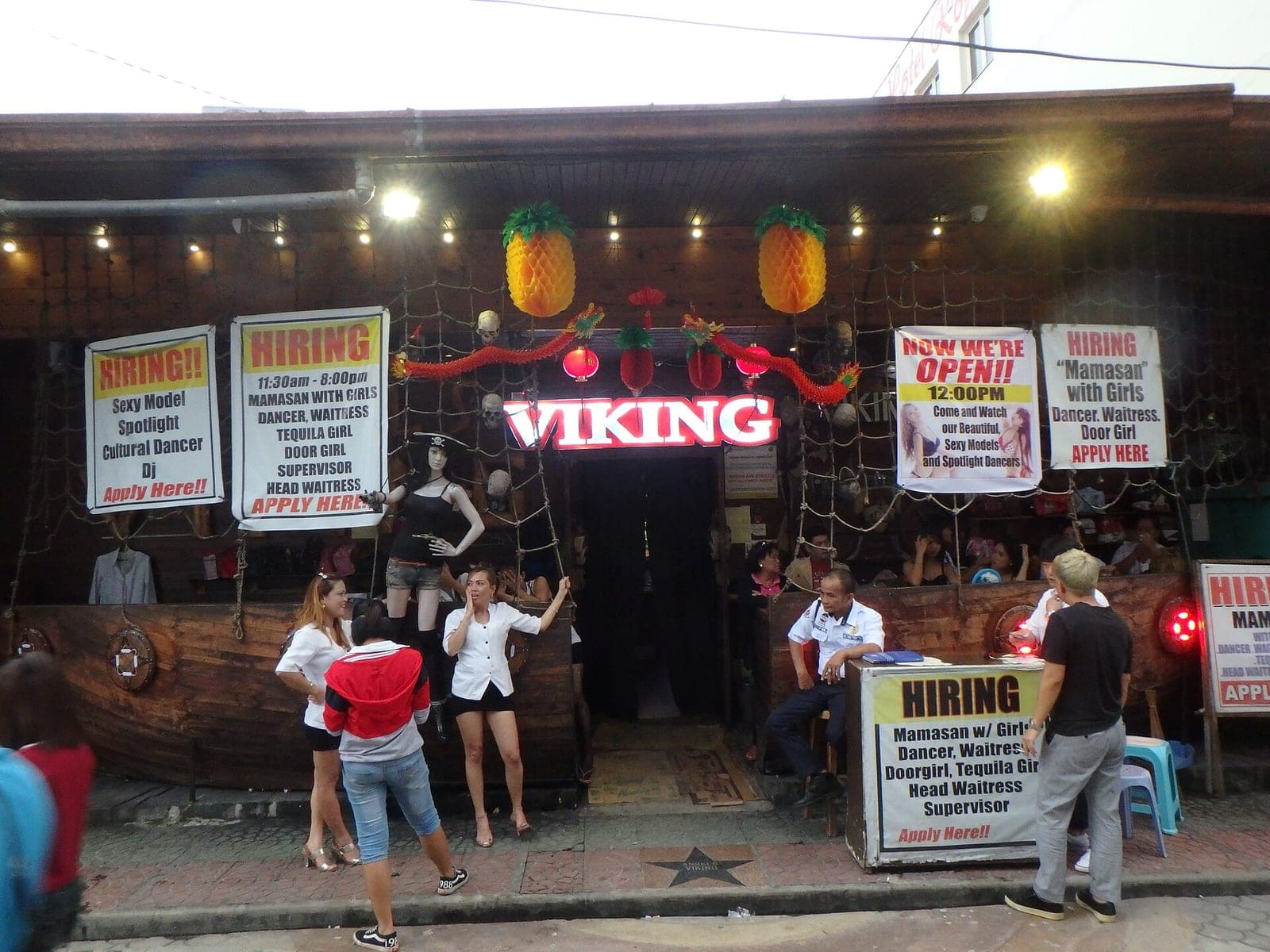
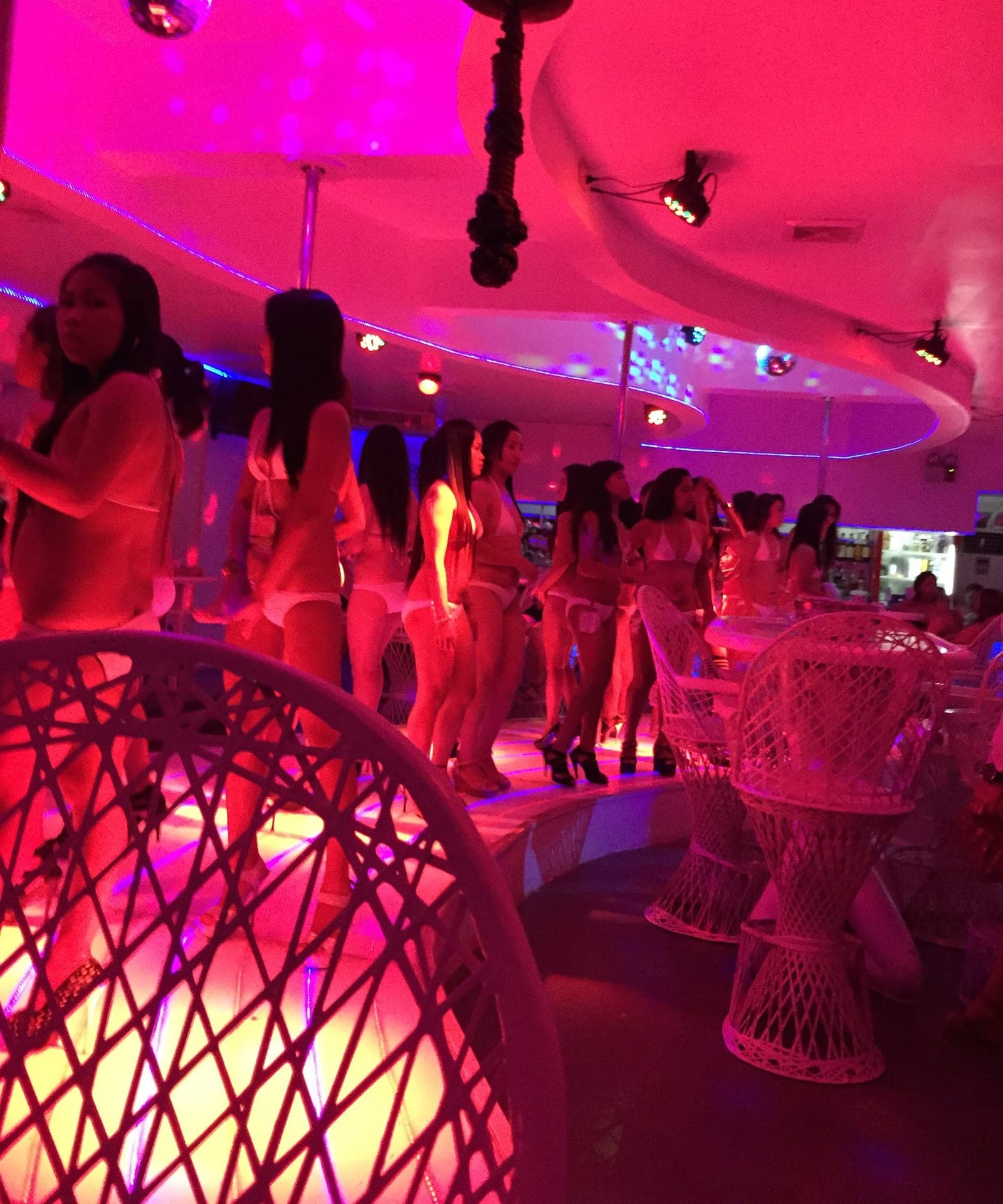
Big rooms or small bars — which suits me?
Both, on different nights. Here's how I'd frame it.
Big rooms — Dollhouse, Viking Bar, Champagne Bar, Salambo — are the spectacle: dozens of dancers, nightclub lighting, a bass line you feel in your ribs. They're where you go on a first night to see what Angeles is famous for. Downsides: top-of-strip prices, hard to hear anyone, and a girl who sits with you may be one of thirty on the floor and less inclined to linger.
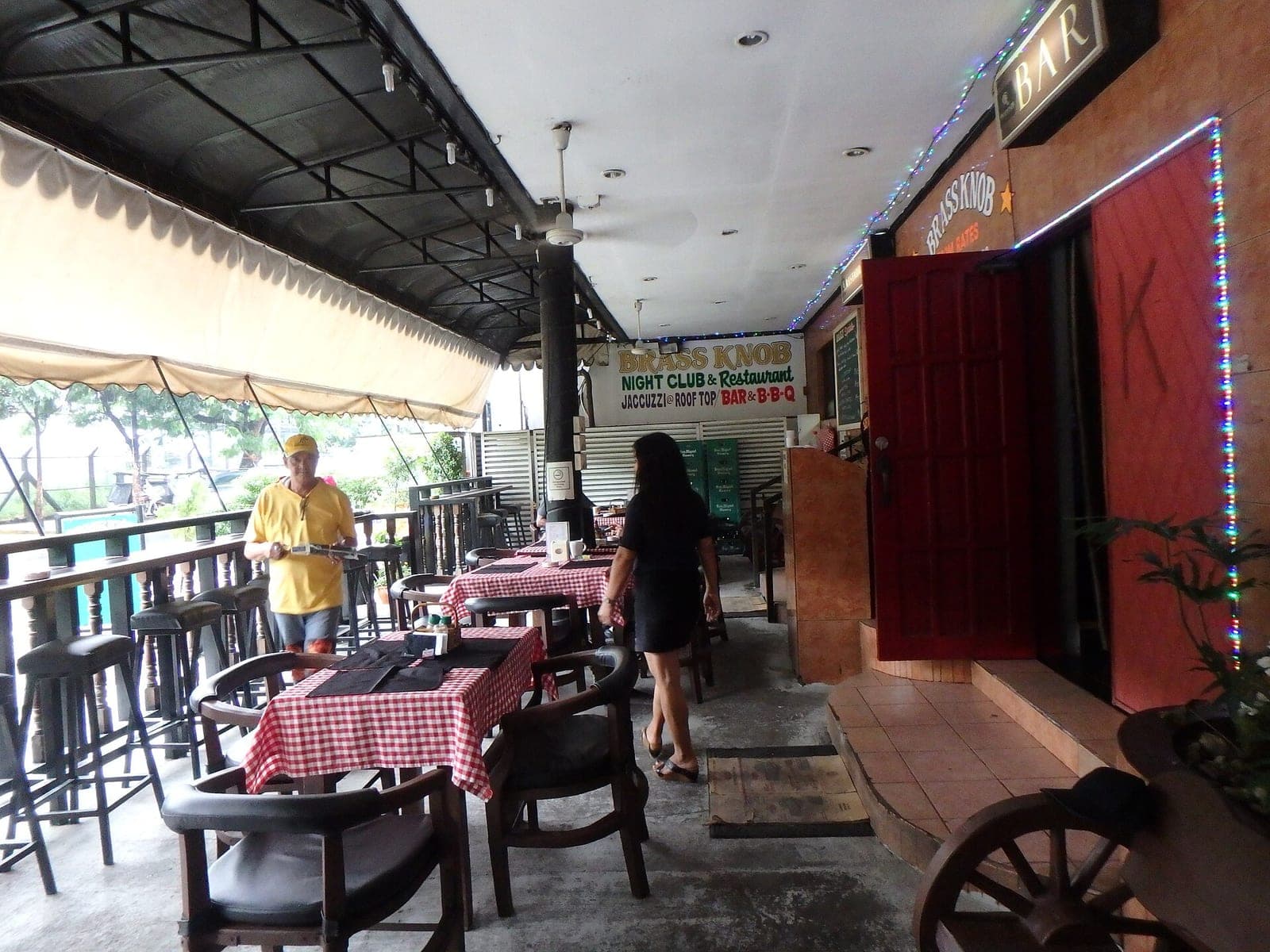
Small bars — Rhapsody, Gecko’s Bar, the rooms on Fields Avenue like After Dark, and Perimeter Road stalwarts like Bar 69 — are the conversation: a dozen girls, cheaper beer, a mamasan who learns your name in two visits, and enough quiet to find out whether you actually like each other's company. Downsides: less show, and if the room's empty at 9pm it stays empty.
| Big room | Small bar | |
|---|---|---|
| Girls on rotation | 30–60 | 8–20 |
| Beer | Top of range | Middle to low |
| Volume | Nightclub | Pub |
| Best for | The show, groups, first night | Conversation, regulars, over-50s |
| Ask the mamasan? | Essential | Optional — she'll find you |
Most blokes settle into a rhythm: an hour in a big room for the buzz, then two hours in a small one for the talk. There's a version of that plan for older gents in the Angeles City Over 50: A Guide for Older Gents.
What's the etiquette — and what gets you thrown out?
The whole of Angeles bar etiquette fits in one line: the girls are adults at work — behave like a decent customer in any other job. The rest is detail:
- Hands. A girl who sits with you may take your arm or hand; that's her call, not your licence. Anything more is by invitation only. Grabbing at dancers on stage is the fastest way to meet security.
- No means no, and "maybe later" means no. From her, and from you. Nobody argues.
- No photos or video of the stage or the girls unless the room says otherwise. Outside on the strip, snap away.
- Don't haggle with the girls. Prices are the bar's; complaints go to the mamasan.
- Don't get sloppy drunk. Loud, sentimental or aggressive drunks get walked out politely, then not so politely.
- Drugs mean jail. Not a fine — jail. Anyone offering is a risk to you.
- Be kind. Learn her name, ask about her day, tip when you leave. It's not complicated.
The full etiquette page — including how to say no gracefully, and what to do if you're the one being hustled — is at Angeles City Bar Etiquette: Do's, Don'ts and How Not to Be That Guy, and the honest safety picture is in Is Angeles City Safe? A Straight Answer for 2026.
How is a KTV different from a go-go bar?
A KTV is a karaoke bar with private rooms, and in Angeles the ones that matter are along Friendship Highway / Korea Town in Korea Town. Instead of a stage and a shared floor you rent a room by the hour — ₱600–1,500 as a rough guide, as of August 2026 — hostesses join your group to sing and pour drinks, and you buy them ladies' drinks or a bottle for the table. It's more expensive, more private and more group-oriented than a go-go bar, and the etiquette is Korean-flavoured: it's a hosted evening, not a stroll past a stage.
For a first-timer I'd do the go-go bars first. If you're a singer, or you're four blokes who want a room to yourselves, a KTV night is good fun; go with someone who's done it, and confirm the room rate and drink prices before the first bottle arrives.