

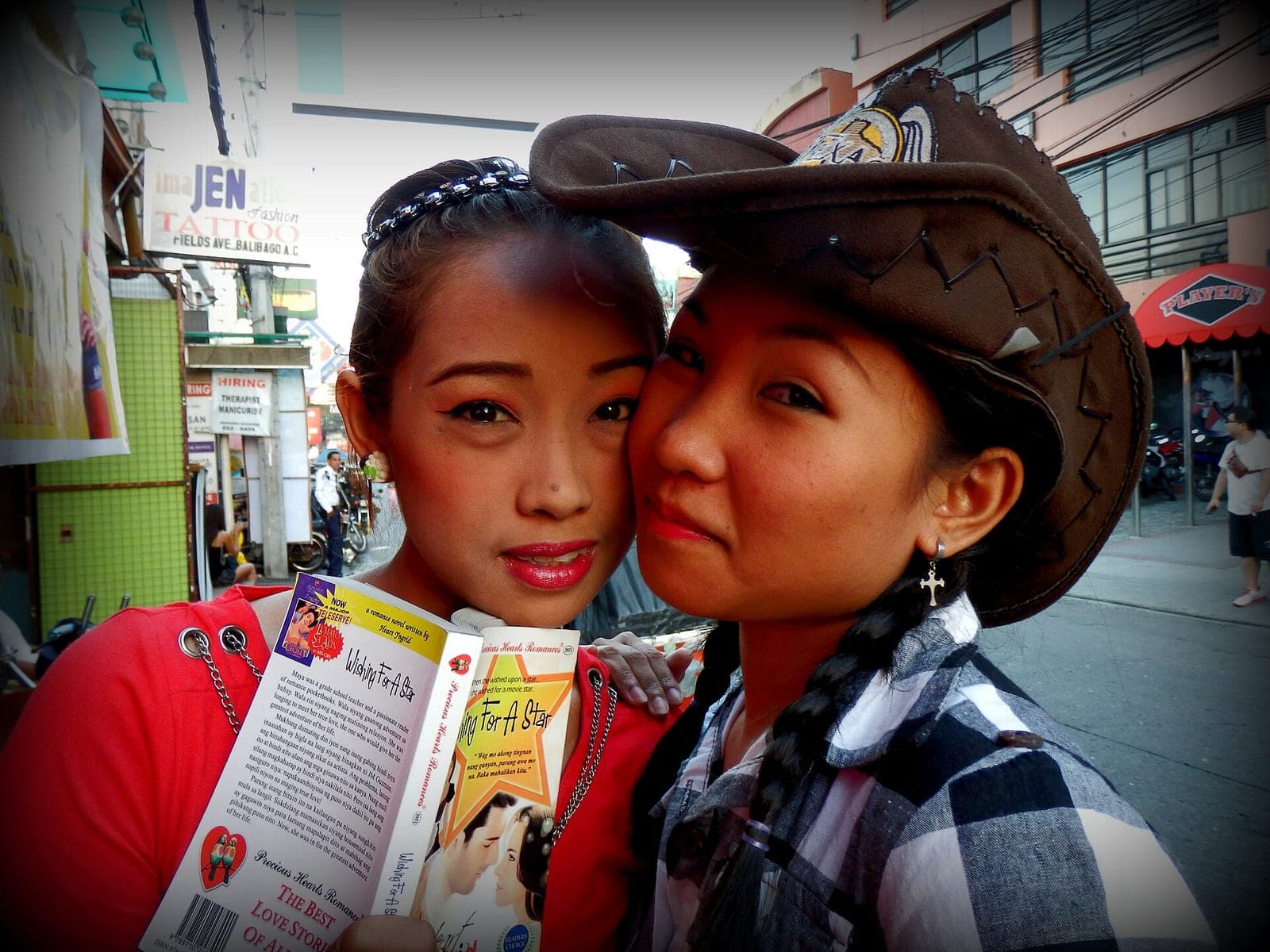
Bar etiquette in Angeles City comes down to one idea: the girls, the mamasans, the waiters and the guards are all at work, and the man who behaves as if he's a guest in their workplace rather than the star of his own film has a better night, spends less, and gets remembered fondly. Everything below is that idea in detail — the do's, the don'ts, and the small Filipino courtesies that turn a tourist into a welcome regular. As ever, "girls" and "ladies" here means adult women who work in the bars.
How should I treat the girls and the staff?
Like colleagues you rather like. Say hello to the greeters outside; they're paid to smile at you and it costs nothing to smile back. Learn a name and use it. Ask a girl about her day before you ask anything else. Say please and thank you to the waitress. Don't click your fingers, don't shout across the room, don't call anyone "hey you".
None of this is soft. It's practical. The girls in a Walking Street bar have seen ten thousand foreigners and they can tell in three seconds whether you're a gentleman or a lump; the gentleman gets the better conversation, the honest tab and the mamasan on his side. The lump gets the empty seat and the padded bill.
And the hardest one for some blokes: "no" means no, in both directions. If she doesn't want to sit with you, buy her a drink or go anywhere with you, that's the end of it — no sulking, no "but I bought you a drink". If you don't want company, a friendly "not tonight, thanks" does the same job. Nobody owes anybody anything beyond the drink in front of them.
How much should I tip in Angeles bars?
Tipping is appreciated, expected in a mild way, and never policed. My rules of thumb as of August 2026:
| Who | Roughly | Notes |
|---|---|---|
| Dancer or waitress who looked after you | ₱100–200 | More if she's been at your table for hours |
| Waiter / bartender | Round up the bill | 10% is generous here |
| Mamasan | Nothing required | A drink or a small note if she's done you a real favour |
| Trike driver | Round up | Small notes, agreed fare first |
| Restaurant | Check for a service charge | Many add 10%; a little on top if you liked it |
| Hotel staff, room cleaner | ₱50–100 | Leave it with a note so it isn't "found" |
Hand tips directly, in the hand or on the tip tray, and don't make a show of it. A hundred pesos is less than two dollars to you and a decent chunk of an evening's income to her — which is precisely why you should do it and precisely why you shouldn't wave it around like a lord.
Can I take photos in the bars?
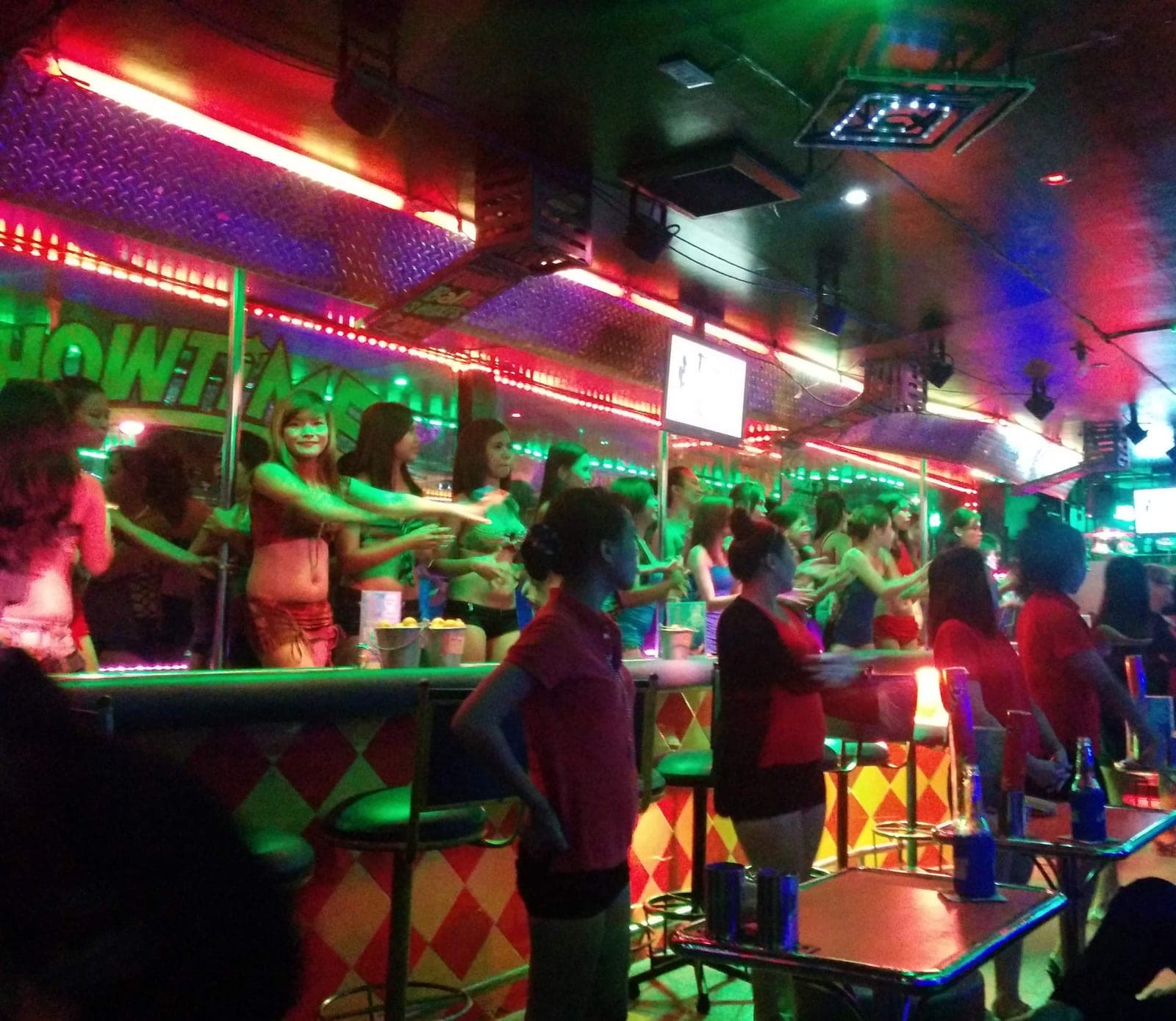
Ask, and expect "no" inside the go-go bars. Most rooms on Walking Street and Fields Avenue have a no-photo, no-video rule for the stage and the girls, enforced by guards who've had this conversation more times than you've had hot dinners. It protects the girls — many of whom have families who don't know exactly what they do — and it's also the law's side of things: the Philippines has an anti-voyeurism statute with real teeth for sharing intimate images.
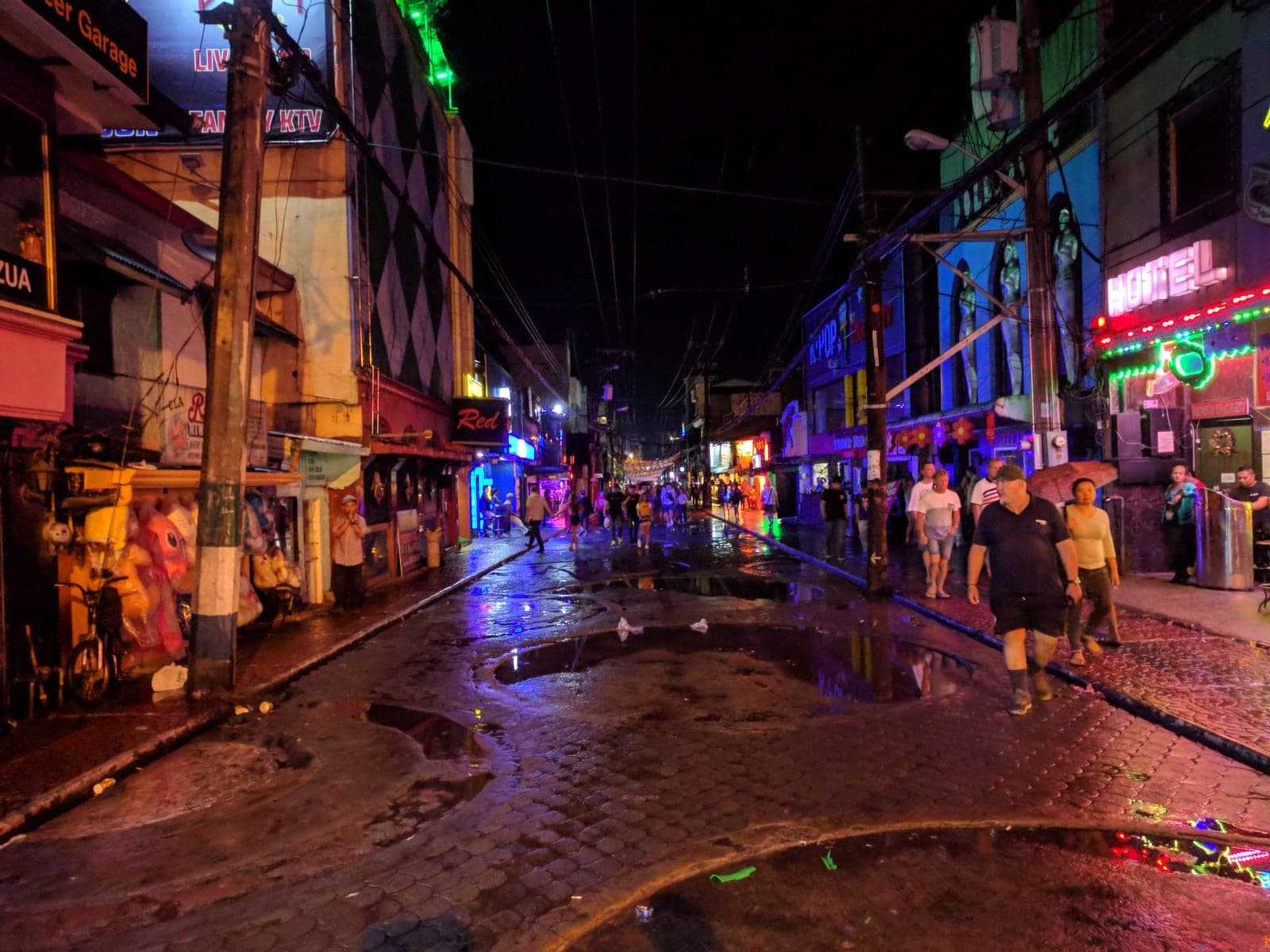
Street shots of the strip, the arch, the crowds: fine. A photo with a girl who's said yes: fine, and usually she'll pose better than you. A sneaky phone under the table pointed at the stage: you'll be asked to leave, and rightly. Selfies with the greeters outside — ask; nine times out of ten they'll grin and get in the frame.
And touching?
Hands to yourself unless invited. A dancer sitting with you is company and conversation; it isn't a licence to grab. Some rooms are more relaxed than others and she'll make it clear, but the default is polite distance and let her set the pace. Grabbing a passing dancer, or reaching for someone on stage, gets you thrown out fast and might get you a slap first — and you'd deserve both.
Should I haggle over ladies' drinks?
No, and it's the quickest way to look like That Guy. A ladies' drink runs about ₱400–600 as of August 2026 — a good chunk more than your ₱180–250 — and the reason it costs more is that part of it is her wage. That's the whole system: buy her a drink, she sits with you. Haggling over it is haggling over her pay in front of her.
You're perfectly entitled to buy fewer drinks, to buy one and see how the conversation goes, or to drink your beer alone and watch the show. You're not obliged to buy her a drink at all. What you can't do with any dignity is try to knock fifty pesos off. If a bar's prices are more than you fancy, the next bar is thirty seconds away — the How Go-Go Bars Work in Angeles City guide has the numbers.
How do I get on with the mamasan?
The mamasan runs the room: she introduces the girls, keeps order, sorts problems and, if she likes you, makes your night effortless. Be polite, be honest with her about what you're after (company, conversation, a quiet drink), and never lie to her about a bill or a girl. Buy her a drink now and then if she's been good to you. Cross her — argue, insult a girl, welsh on a tab — and you'll find every seat in that bar suddenly taken. She's the most useful person in the building. Treat her like it.
How do I avoid being That Guy?
Two things, mostly: knowing when you've had enough, and not turning up looking like you've slept in a skip.
When you've had too much
It happens. The town is built to help you have too much. When it does: don't argue with guards, don't argue with the bill (query it sober tomorrow, or pay and take it up with the mamasan calmly), don't try to prove anything to anyone. Drink a water, get some sisig into you, take a trike, sleep. Fighting in Angeles is the fastest way to a night in a cell, a hospital bill and, for a foreigner, immigration paperwork; the guards here are professionals and they win. If a mate's had too much, get him home — that's what mates are for.
What to wear
Nobody dresses up for the bars: shorts, a T-shirt or a loose shirt and flip-flops or trainers are the uniform, and the girls dress the same when they're off duty. Keep the shirt on in the street and in the bars — shirtless is for the pool. Nightclubs and the casinos in Clark Freeport Zone may want closed shoes and a collar; the fancier hotel restaurants likewise. Beyond that, clean, not reeking, and not wearing the football shirt of a country you're about to insult.
What Filipino manners should I know?
You don't need Tagalog (or Kapampangan, which is what most locals actually speak first up here), but a handful of habits mark you as someone who's paying attention:
- "Salamat" — thank you. Say it constantly. "Po" and "opo" are the respectful particles you'll hear; using them isn't required from a foreigner, but they're never wrong.
- "Kuya" and "ate" — literally big brother/big sister; how you address a waiter, a trike driver, a shop girl. "Kuya, one more San Mig, please."
- Smile, don't shout. Raised voices and public anger are shaming here — for the person you're shouting at and for you. Problems get solved quietly, with a smile, or not at all.
- Don't shame anyone in public. Filipinos talk about hiya — roughly, face. Correcting a bill is fine; humiliating the waitress who brought it is not.
- Respect the church. This is a deeply Catholic country and Pampanga is a devout part of it. Girls who work in bars go to Mass. Don't mock it, don't wear a rosary as bling, and expect things to go quiet over Holy Week.
- Eat what you're offered. If someone shares food, take some. Sisig, in particular, is a sacrament round here.
- Don't be the loud table. Filipinos are warm and noisy at their own parties and remarkably tolerant of foreigners' — but the table of shouting drunks is the one everybody remembers, and not fondly.
And the karaoke etiquette?
Karaoke — videoke — is a national religion, and the KTV rooms of Friendship Highway / Korea Town and the machines in half the beer bars come with rules. Wait your turn; don't grab the mic. Applaud everyone, even the tone-deaf, especially the tone-deaf. Sing your song, don't hog the machine, and don't laugh at anyone's singing. There's an old bit of Philippine folklore about fights over "My Way"; treat it as a joke and pick something else anyway. And if a girl at your table sings, that's a gift — listen.
What do I do when a girl asks for money?
It'll happen: a tip, a loan, an "emergency", a phone load. Some of it is normal and fair — a girl who's sat with you for three hours has earned a tip on top of her drinks. Some of it is the sick buffalo (see the Angeles City Scams & Rip-offs to Avoid page). Here's the etiquette:
- Tips for time and kindness: yes, freely. That's how the place works.
- Loans and emergencies from someone you've just met: no, kindly. "Sorry, I can't" with a smile. You don't owe an explanation and you shouldn't get into a negotiation.
- Don't lecture her. She's not a charity case and she's not a con artist; she's someone doing a hard job in a poor country and trying her luck. Refuse the request, not the person.
- If you're getting close to someone, go slowly, meet the family before the money, and read the Dating a Filipina: What Every Foreign Guy Should Know guide before you start sending anything.
The whole thing in one paragraph
Be polite to everyone, tip a little and often, keep your hands and your camera to yourself unless invited, don't argue about ladies' drinks or bills in front of the girls, respect the mamasan, respect the church, don't shout, don't fight, don't grab the mic, and say "sorry, I can't" with a smile when someone asks for money. Do that, and this town — which has forgiven a great many worse men than you — will treat you like family. Now go and read the Is Angeles City Safe? A Straight Answer for 2026 and Rules & Laws Tourists Break in Angeles City (Don't) pages so you don't undo it all with a cigarette in the wrong place.