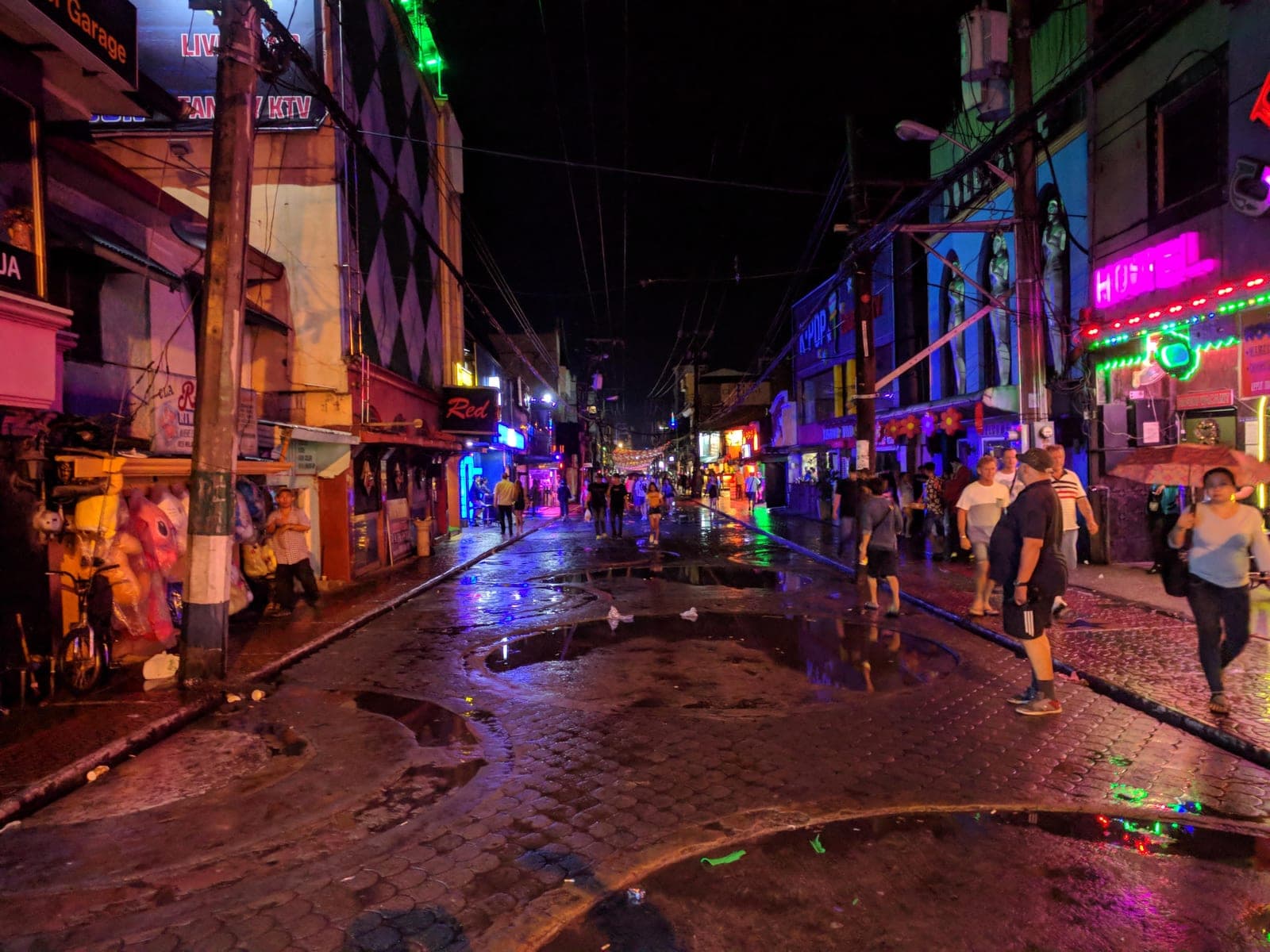


Fields Avenue is the road that ran from the main gate of Clark Air Base through Balibago, Angeles City, and its bar strip grew up serving American airmen from the 1940s onward; today its pedestrianised heart, Walking Street, is the most famous go-go strip in the Philippines. It has been flattened by a volcano, abandoned by an air force, rebuilt by expats, reshaped by Koreans, shut by a pandemic and rebuilt again — and it's still open tonight.
I'm not a historian. I'm a bloke who arrived at the tail end of the '90s, started an email newsletter to a few dozen mates the following year ("Welcome to my stable!" — the joke has outlived most of the bars it was about), and never left. What follows is the public record with my own footnotes. Where I'm remembering rather than citing, I'll say so.
Where did Fields Avenue get its name?
From the air base. The Americans set up Fort Stotsenburg on the plain north of Angeles in 1903, and the airfield attached to it was named Clark Field in 1919 after a US Army aviator, Harold Clark. The road that ran from the base's main gate out towards the town was, in the way of military towns everywhere, "Clark Field Avenue" — the road to the field. Over decades of hand-painted signs it wore down to "Fields Avenue", plural, and that's the name it kept when the field became Clark Air Base and, much later, Clark Freeport.
The barangay it runs through, Balibago, was farmland and a few houses before the base; the base made it a town. Malabañas, at the western end where the hotel towers now stand, was likewise fields (real ones) until well after the war.
What was Fields Avenue like in the Clark Air Base years?
A garrison strip, in the way that Olongapo was for Subic and Pattaya was for U-Tapao. The commonly told story is that there were only three bars outside the main gate in the 1940s and '50s; by the early 1960s Fields Avenue was a street of them; and by the 1970s, with America's war in Vietnam pumping men and aircraft through Clark, the strip had ballooned to well over a hundred bars, clubs and everything that goes with them, employing — by some accounts — the better part of twenty thousand Filipinos directly and indirectly. Clark was by then one of the largest US bases anywhere outside the United States, and Fields Avenue was its front porch.
The bars were American-flavoured: rock and country bands, cheap San Miguel, pool tables, jukeboxes, and the "hostess" system that every Asian military strip evolved and that today's ladies' drink is the direct descendant of. Downtown Angeles, meanwhile, got on with being a Kapampangan provincial city — and, as the story goes, gave the world sizzling sisig when Lucia "Aling Lucing" Cunanan started grilling pig's head by the railway crossing for airmen in the 1970s. Her family's place is still there, at Aling Lucing's Sisig.
What happened in 1991?
Two things at once, and the town has never quite been the same.
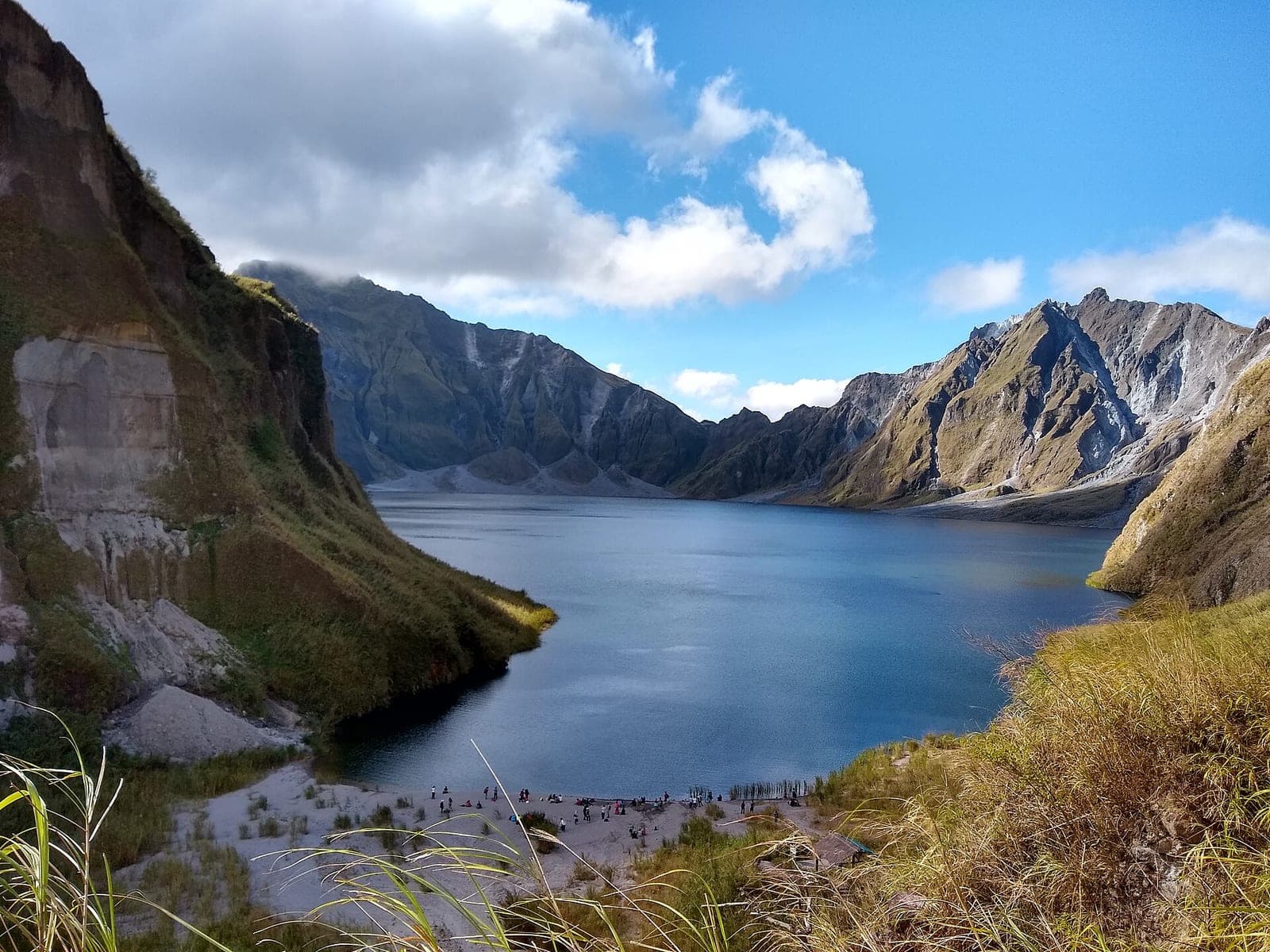
First, Mount Pinatubo. After some five centuries dormant, the volcano twenty-odd kilometres west of Clark began stirring in April 1991, and on 15 June it produced the second-largest volcanic eruption of the twentieth century. The base was evacuated to Subic a few days before; the ash cloud, mixed with rain from a passing typhoon, dropped a heavy grey blanket across Clark, Angeles, Dau and every roof for miles. Buildings collapsed under the weight. Fields Avenue was ankle-deep in wet ash. Over the following years the lahar — the rivers of remobilised ash that came down with every monsoon — buried whole towns south of the city, including Bacolor, whose half-buried church you can still visit (see Day Trips from Angeles City).
Second, the vote. Negotiations to extend the US bases agreement had been dragging on, and on 16 September 1991 the Philippine Senate voted against a new treaty. Clark was, by then, a wrecked base with a fresh volcano next door, and the Americans decided not to dig it out. On 26 November 1991 the US Air Force formally handed Clark to the Philippines. Subic Bay Naval Base was handed over a year later, in November 1992.
Almost at a stroke — in truth it took months — Fields Avenue lost the customers it had been built for. Bars closed. Looters stripped the base. People who were here then talk about a ghost town of ash-grey buildings and shuttered signs, and I believe them.
How did the strip rebuild in the '90s and 2000s?
Slowly, then all at once. The Bases Conversion and Development Act of 1992 turned the base into the Clark Special Economic Zone (later Clark Freeport Zone) under the Clark Development Corporation, and civilian flights started using the old runways in the mid-1990s. Investment came into Clark Freeport Zone — factories, a casino or two, the golf courses — and, more to our point, into Balibago. Through the late '90s and 2000s, foreign bar owners (a lot of Australians, some Americans and Brits, later Koreans) bought or built go-go bars, and hotels went up along Fields Avenue and Perimeter Road to house the men who came to drink in them. The customers were no longer airmen on a night pass; they were tourists on a fortnight's leave, and the strip re-tooled accordingly — bigger rooms, more dancers, a lot more neon.
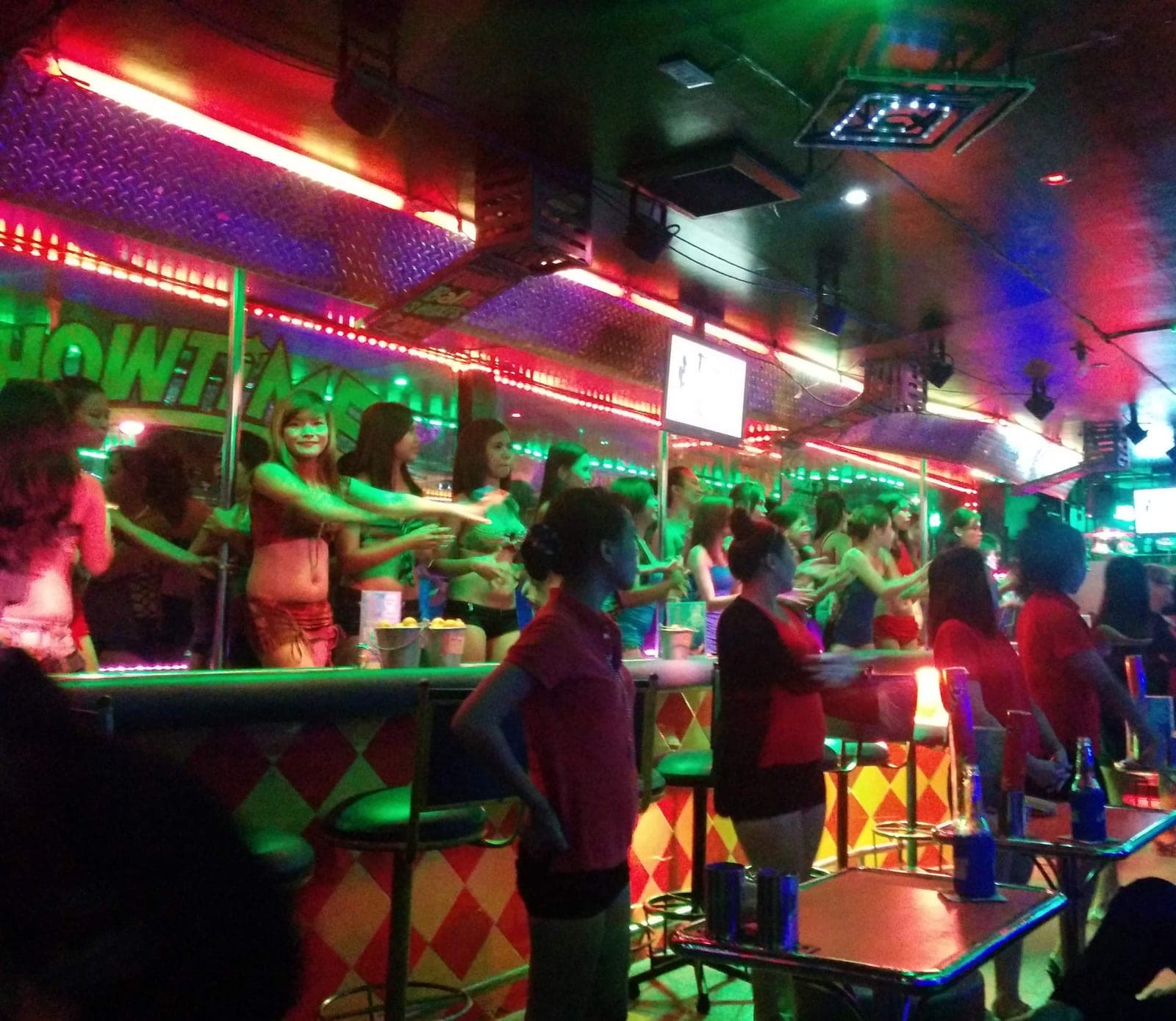
That's the Fields Avenue I found around 1999: half rebuilt, half still boarded, cheap as chips, and full of the friendliest bar staff I'd ever met. My newsletter started as a way to tell mates back home which bars had opened and which had gone under; the joke was that I'd started a stable of readers, and the sign-off stuck. The big-room era — the two-level palaces you see today, Dollhouse and its neighbours — really got going in the mid-2000s, and by the end of that decade the strip was arguably busier than it had ever been under the Americans.
| Year | What happened |
|---|---|
| 1903 | Fort Stotsenburg established north of Angeles; airfield named Clark Field in 1919 |
| 1940s–60s | First bars outside the main gate; Fields Avenue becomes a bar street |
| 1965–75 | Vietnam War traffic through Clark; strip grows to over a hundred bars |
| 1991 | Pinatubo erupts (June); Senate rejects bases treaty (September); US hands over Clark (26 November) |
| 1992 | Subic handed over; Bases Conversion and Development Act creates Clark Special Economic Zone |
| Late 1990s | Tourist-era rebuild of Fields Avenue begins; civil flights from Clark; a certain Horse arrives |
| 2000s | Big-room go-go bars, hotel building boom, Korea Town grows on Friendship Highway |
| c. 2010 | Stretch nearest MacArthur Highway named "Walking Street" and pedestrianised in the evenings |
| 2020–22 | COVID lockdown; strip closed to tourists; borders reopen February 2022 |
| 2022 | New Clark International Airport terminal opens |
| 2023–26 | Rebuild and rebrand; new bars, new hotels, new crowd |
When did Walking Street become Walking Street?
Around 2010. The city designated the block or so of Fields Avenue nearest MacArthur Highway — the densest stretch of go-go bars — as "Walking Street", banned vehicles from early evening to early morning, and in time put up the arch you walk under today. The name was lifted, quite deliberately, from Pattaya's Walking Street, and there's a whole guide comparing the two towns at Angeles City vs Pattaya: An Honest Comparison. Before that it was simply "Fields" or "the strip", and jeepneys and trikes ground through the crowd all night, which was atmospheric right up until one clipped your elbow.
Pedestrianisation changed the feel more than any single bar opening: the greeters could work the middle of the road, the crowd could stroll rather than dodge, and the strip started to feel like a place rather than a road. Everyone I know who remembers the old traffic prefers the new arrangement, and everyone under forty doesn't know there was one. Today's Walking Street is that block plus what's grown around it, and the off-strip stretch of Fields Avenue and the Blow Row cluster carry on beyond.
What's the Korean wave got to do with it?
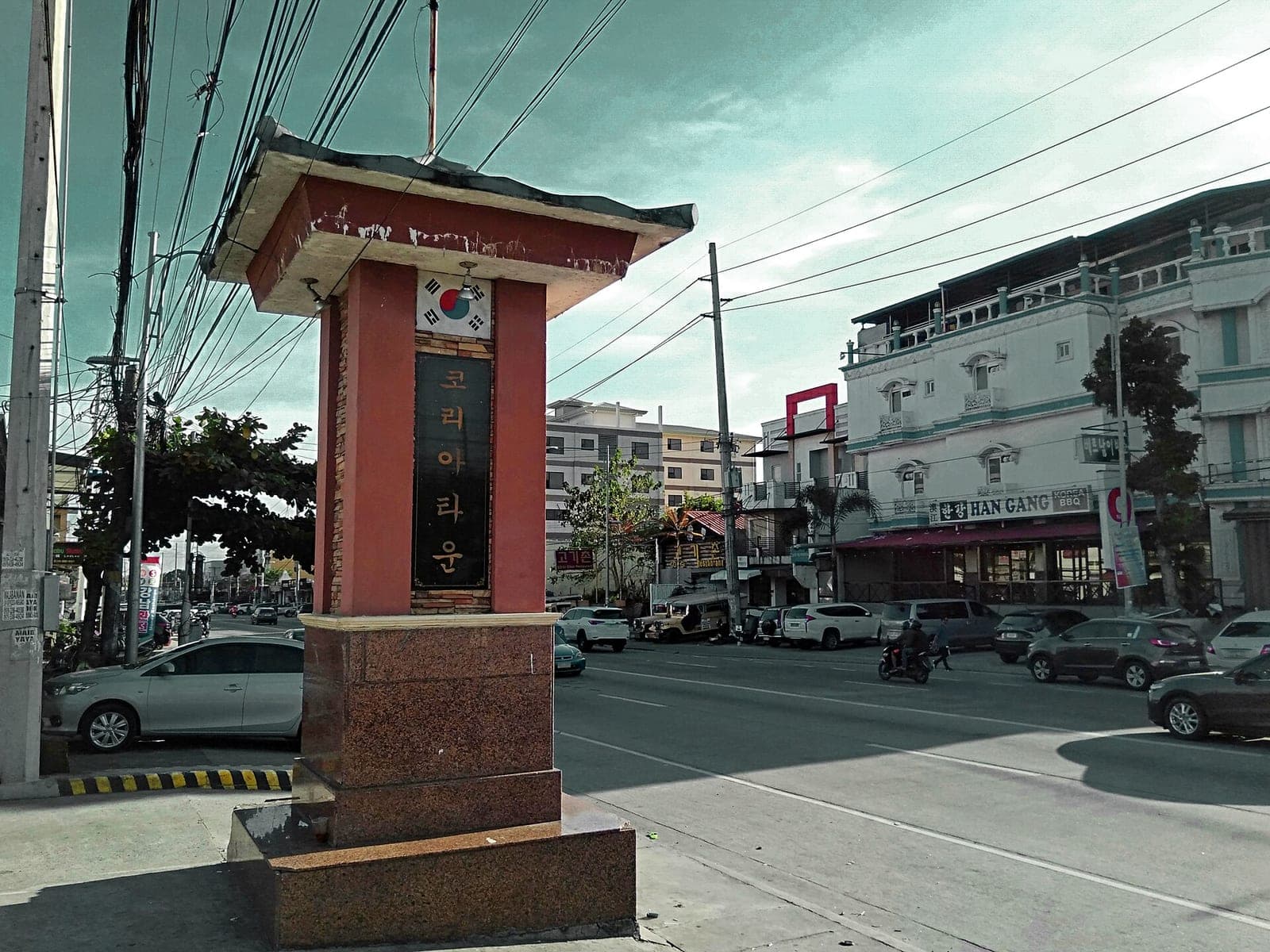
A great deal, though mostly out of sight of the strip. From the early 2000s South Koreans became the largest group of foreign visitors to the Philippines, and Clark, with direct flights to Seoul and Busan and a golf course for every day of the week, became one of their favourite corners of it. Korean investors bought into Clark, Korean students filled English academies around Angeles, and Friendship Highway / Korea Town — the road from the Clark main gate towards Balibago — turned into Korea Town: barbecue restaurants, groceries, churches, hotels and the private-room KTV bars that run on a very different system from the go-go bars (see How Go-Go Bars Work in Angeles City).
For a while in the 2010s a good chunk of the money in Balibago hotels and bars was Korean too, and some of the biggest rooms changed hands accordingly. The Korean presence has waxed and waned — the offshore-gaming outfits that filled Clark office towers in the late 2010s were ordered shut by the government in 2024, and a wave of Chinese money came and went with them — but Korea Town remains one of the best places to eat in Angeles and a useful reminder that Fields Avenue isn't the whole town.
What did COVID do to Fields Avenue?
Shut it. The Philippines locked down in mid-March 2020, foreign tourists were barred, and the go-go bars closed — some for good. For the better part of two years the strip was dark or running as a row of half-hearted restaurants; the girls went home to the provinces, expat owners burned through savings, and a few of the names that had defined the 2000s never reopened. The country let vaccinated tourists back in on 10 February 2022, and Walking Street came back to life through that year — thin at first, then, by the 2022–23 high season, recognisably itself.
If you were here before and after, the differences are subtle but real: new owners in old rooms, some bars renamed, a younger and more international crowd, and a lot more Koreans, Chinese and Middle East–based expats among the Australians and Brits. If it's your first time, you'd never know. That resilience is the whole point of this page.
What does the strip look like in the 2020s?
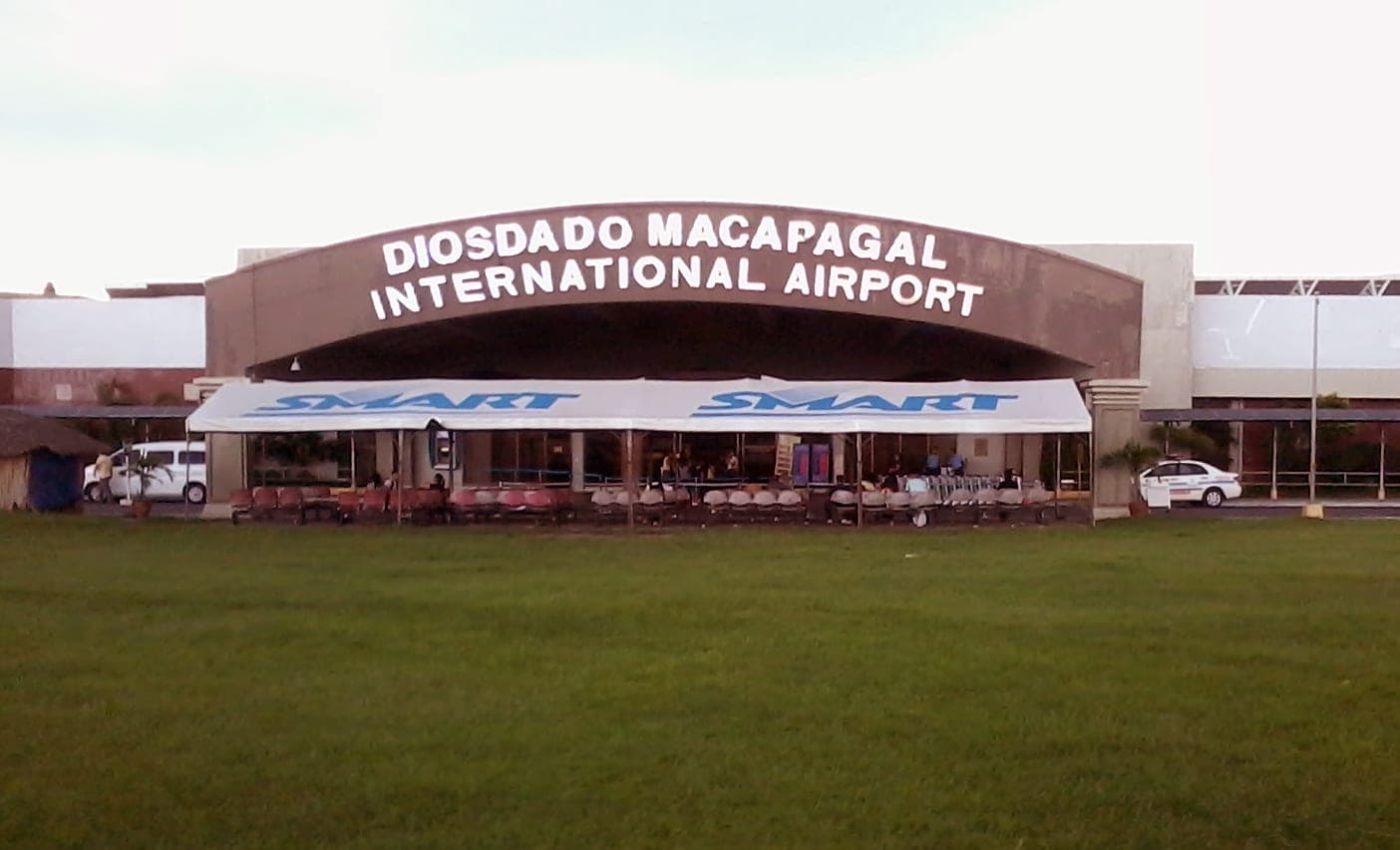
Busy, rebuilt and slightly smarter than it was. A new Clark terminal opened in 2022 and direct flights keep multiplying, which has done more for Balibago than any bar ever could. Hotel towers went up along Malabañas and Fields Avenue; the big rooms on Walking Street reopened with new light rigs; the small bars on Perimeter Road and Santos Street carried on exactly as before, God bless them. Prices are up — a beer in a big room is ₱180–250 as of August 2026, which would have bought a round in 1999 — but so is everything, everywhere.
The bigger change is quieter. Back in the day you arrived knowing nobody and let the strip introduce you. Now a striking share of the men walking under the arch already have someone waiting — a girl they've been chatting with online for weeks, sometimes months. The bars are still full; they've just become the night out rather than the whole point. I have views on that (mostly approving; see the guide to How to Meet Filipinas in Angeles City Outside the Bars), and I'll leave them for another page.