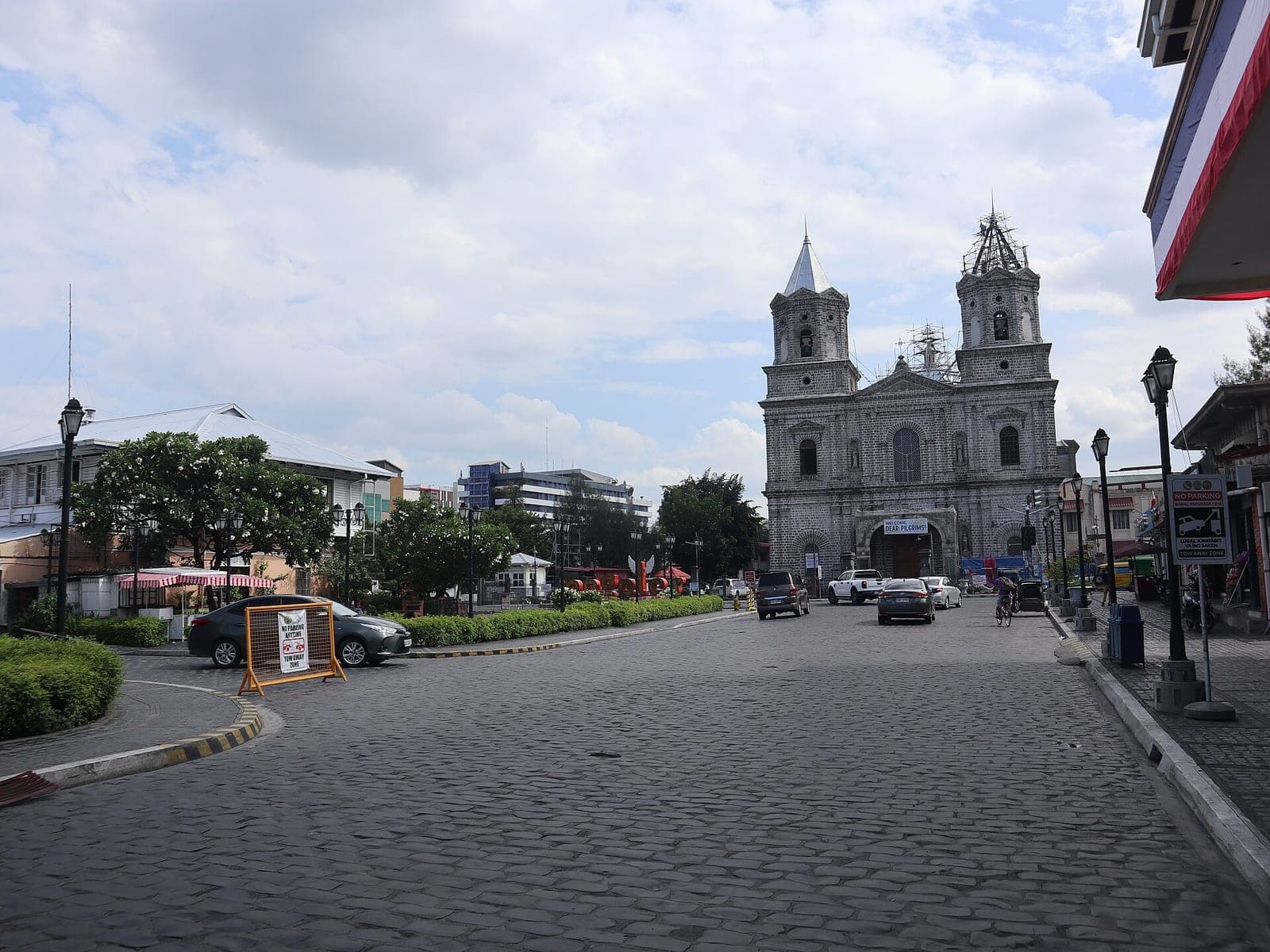




Downtown Angeles is the old heart of Angeles City — the poblacion around Barangay Santo Rosario, four or five kilometres south of Balibago on the other side of the Abacan River — where the church, the plaza, the heritage houses, the market and the city’s famous sisig all live. If Fields Avenue is the town’s reputation, downtown is its actual life, and a half-day here is the best cure I know for thinking Angeles is only a bar street.
A little history, briefly. Angeles started in 1796 as a settlement called Culiat, carved out of San Fernando by the Kapampangan couple Don Ángel Pantaleón de Miranda and Doña Rosalía de Jesús, and grew into a town in 1829 and a city in 1964. The old centre kept its Spanish-colonial bones: a stone church facing a plaza, big-family mansions on the streets around it, and a grid of narrow roads with names like Santo Entierro, Miranda and Santo Rosario. The Americans came through, the war came through, Pinatubo dumped ash on it in 1991, and downtown carried on. It’s scruffy in places and beautiful in others and, unlike Balibago, almost nobody here is trying to sell you anything but lunch.
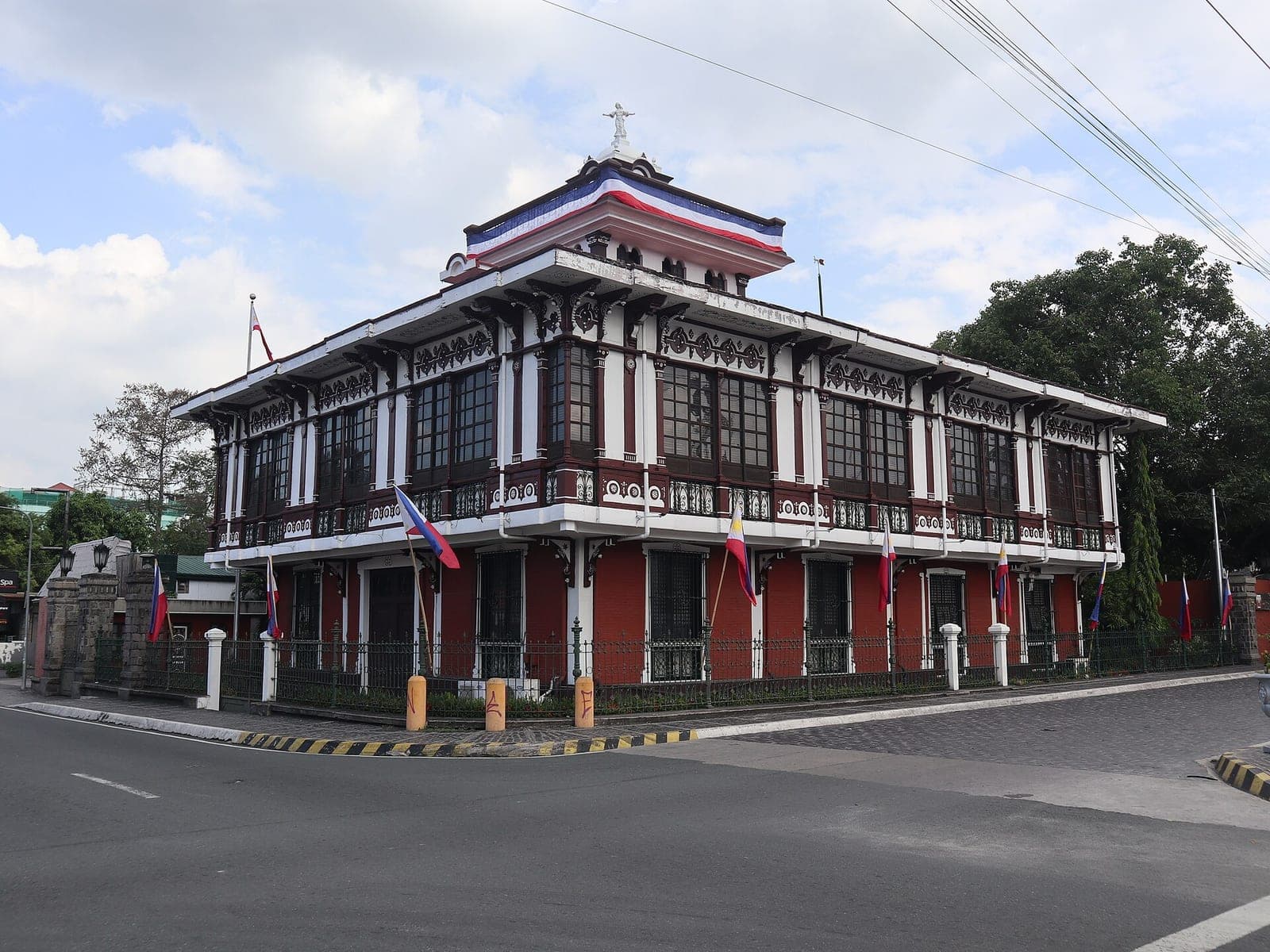
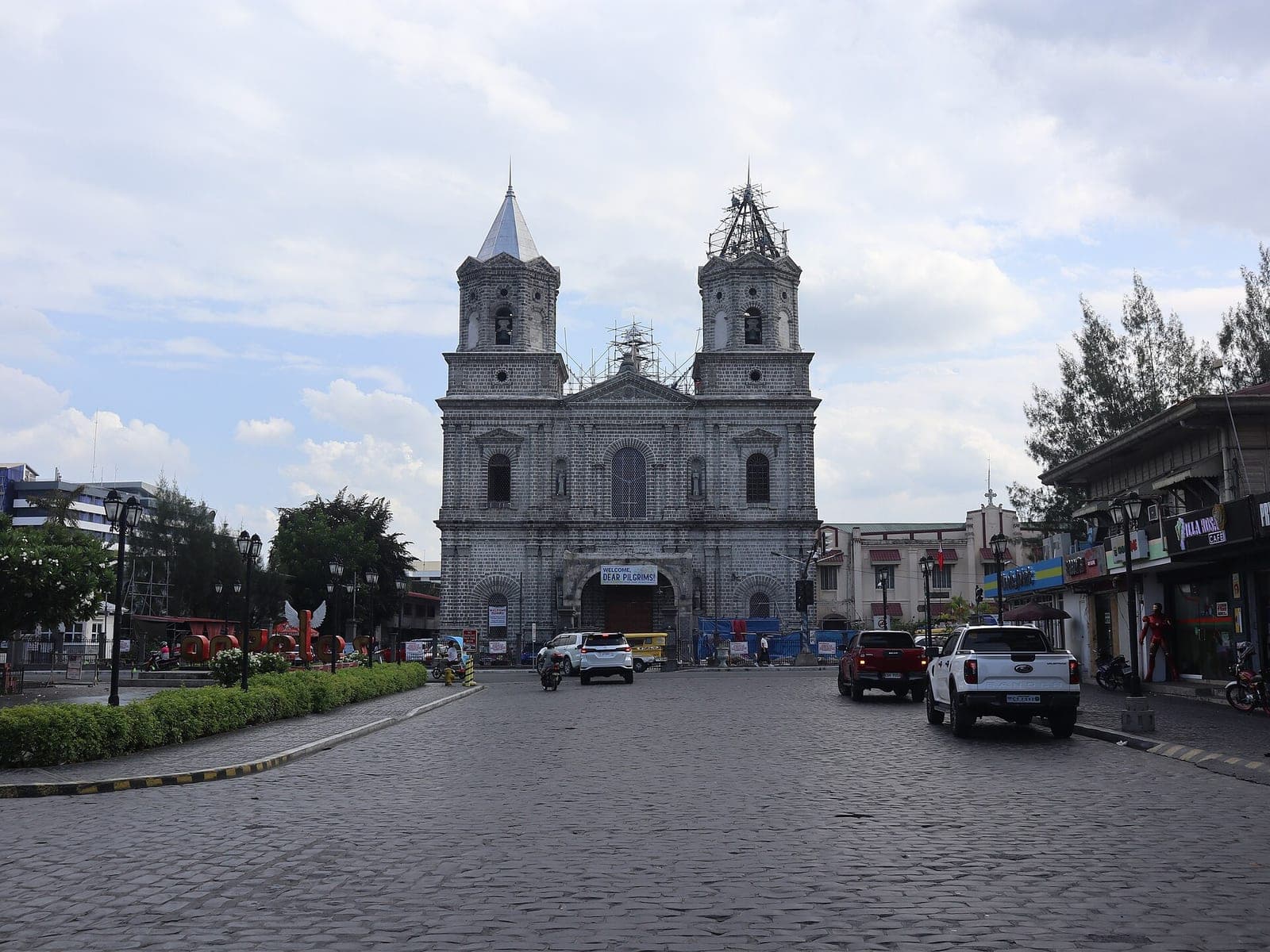
What to see (as of August 2026). The Holy Rosary Parish Church is the landmark: a big stone church built in the late nineteenth century, declared an Important Cultural Property by the National Museum, with a plaza in front where the town gathers for fiestas. A block or two away the Pamintuan Mansion — the 1890s house where Aguinaldo set up his headquarters and marked the first anniversary of Philippine independence in June 1899 — is now a museum of Philippine social history and open most days for a modest fee; check the hours. The Museo ning Angeles occupies the old city hall on Santo Rosario Street and does a good job on Kapampangan life, food and the Clark years. Bale Herencia and a scattering of other heritage houses round it out; you can see the lot on foot in an hour or two, ideally in the morning before the heat.
Nepo Mart and the shopping streets. Nepo Mart, the Nepomuceno family’s market-and-mall complex a short walk from the church, is where downtown shops — a warren of stalls, a supermarket, phone shops, tailors, and Susie’s Cuisine for Kapampangan sweets and kakanin to take home. Around it are the ordinary Filipino streets that Balibago doesn’t really have: bakeries, hardware, pawnshops, sari-sari stores, and jeepneys queueing three deep. It is loud and busy and completely unbothered by foreigners.
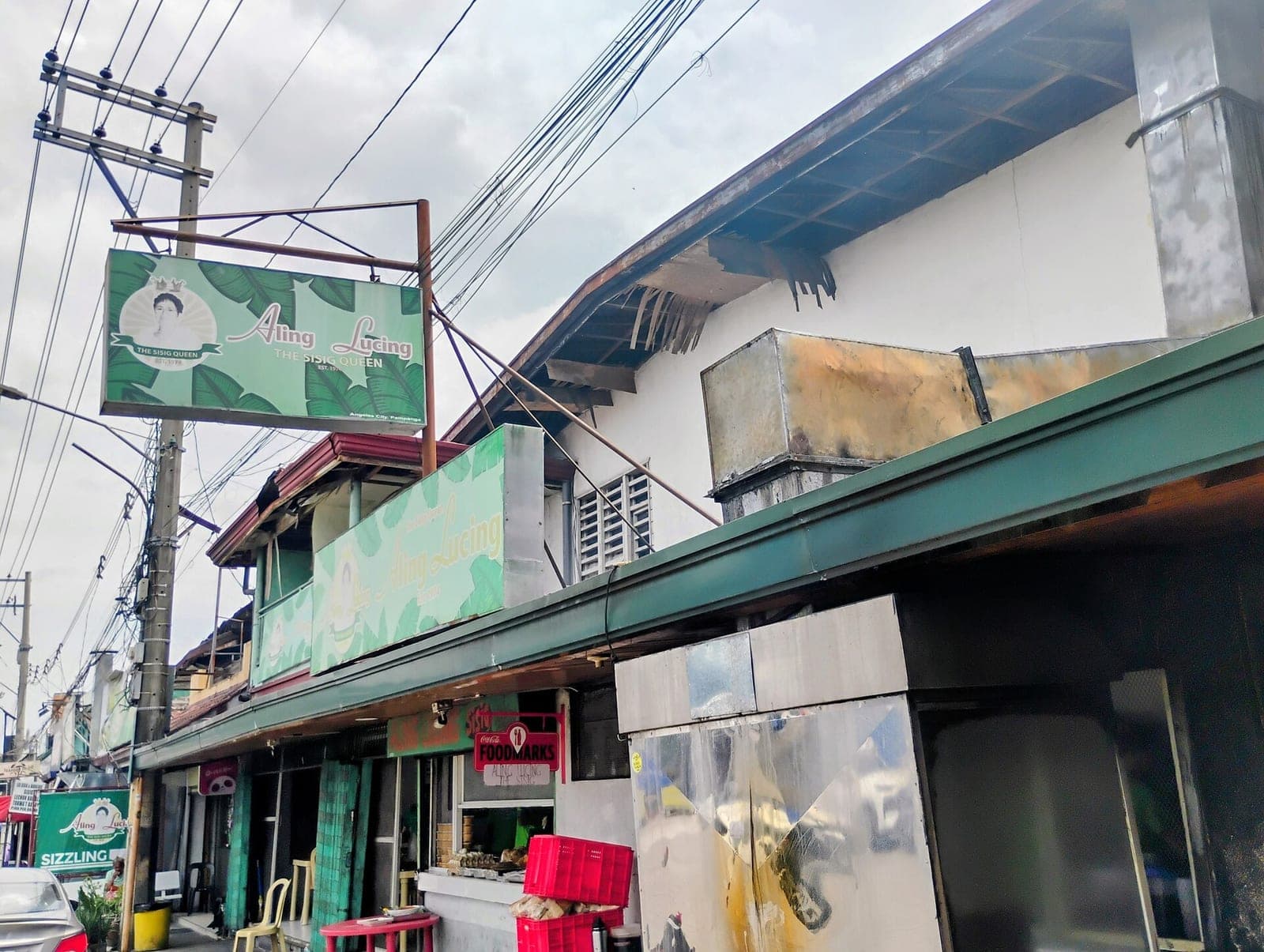
Sisig — the reason to come. Sisig, the chopped, sizzling pig’s-head-and-liver dish that has conquered the country, was born in Angeles, and Aling Lucing’s at the old railway crossing (locals just say “Crossing”) is the shrine: Lucia Cunanan started sizzling it here in the 1970s and the family still serves it on a hot plate with a raw egg on request. A plate is roughly ₱150–250 as of August 2026 and best with a San Mig and a plate of rice at eight in the evening when the smoke is thickest. Downtown also has the Kapampangan classics — bringhi, kare-kare, tibok-tibok, halo-halo — at family restaurants that have fed three generations, and a sisig festival most Aprils. Everybody eats well here; nobody dresses up.
Nightlife. Not really. Downtown has karaoke joints, a few local bars, a couple of coffee shops that stay open late and, in October, the Tigtigan Terakan keng Dalan street party when the plaza and Miranda Street fill with bands and stalls until the small hours. But there are no go-go bars, no hello girls and no strip; the town’s bar life moved to Fields Avenue decades ago and stayed there. Come for the day, eat, and be back in Balibago by the time the neon comes on.
Getting there. Jeepneys run down the MacArthur Highway from Balibago and Dau to “Angeles” or “Checkpoint” for ₱15–25 and drop you a short walk from the church; a trike from Fields is ₱150–250 (agree first) and Grab is ₱150–250 too, faster and air-conditioned. It’s 15–25 minutes depending on the Abacan bridge traffic. Once you’re downtown, walk — the heritage core is compact — and use trikes for Nepo Mart and Crossing if the heat wins.
Safety and manners. Daytime downtown is as safe as any provincial Filipino city centre: busy, watched, ordinary. Markets are pickpocket country, so front pocket, small notes, no dangling phone. It goes quiet after dark and the streets around the market are dim; there is nothing to fear but nothing to do either, so a Grab back to Balibago at nine is the sensible move. Dress like a grown-up for the church — shoulders and knees — and if you turn up during a Mass, stand at the back and be quiet for ten minutes. You’ll be rewarded with the only air-conditioning in the poblacion.
- Stable tip: do downtown as a late-morning outing — church and mansion at ten, Museo at eleven, Nepo Mart for sweets, an early sisig lunch — and be horizontal by a pool by three.
- Stable tip: Aling Lucing’s original branch at Crossing is the one; there are namesakes and imitators around town. Ask for “Crossing” and any trike driver will nod.
Harry says: I bring every visitor down here at least once, usually on his second or third day when the neon starts to look the same, and every one of them comes back saying the same thing — “oh, so there’s an actual city.” Yes, mate. Read the day-trips guide for what else is within an hour, the history-of-Fields-Avenue guide for how the bars ended up four kilometres north of the church, and — if the girl you’ve been chatting to online is a local — the dating-a-Filipina guide, because this is where her family lives.
Where it is
The old poblacion around Barangay Santo Rosario, Angeles City — about 4–5 km south of Balibago across the Abacan River, centred on the Holy Rosary Parish Church, with Nepo Mart and the Crossing (Aling Lucing’s) a short walk or trike away.
How to get there
Jeepney down the MacArthur Highway from Balibago or Dau (₱15–25, 15–25 minutes) to “Angeles”/“Checkpoint”; trike from Fields Avenue ₱150–250 (agree first); Grab ₱150–250. Walk the heritage core once you are there.
The vibe
A working Kapampangan city centre — church bells, jeepney horns, market bustle and sisig smoke, with no neon and no hello girls.
Best for
- heritage and history
- sisig and Kapampangan food
- a day off the strip
- markets and local shopping
- seeing the real city
Safety note
Busy and ordinary by day; quiet and dim around the market after dark. Front pocket in the markets, dress properly for the church, and Grab or jeepney back to Balibago by mid-evening — nothing to fear, just nothing to do.